Climate change is what most people call it. Yet, at this point, it may be better put as climate crisis, or climate emergency. The world is changing at a rapid pace, and it is not just global warming. Global warming isn’t causing the polar vortexers, or the long, large droughts, or the increasingly common natural disasters, including hurricanes and typhoons. No one can really support that it is all fake at this point. The amount of times the words climate change are uttered nowadays are in the tens and hundred thousands daily. Climate change is real, and it’s affecting our planet.

One effect of climate change are the record-breaking heat levels. The unprecedented levels of warming will only continue. The top seven hottest years on record for the entire globe have all occurred since 2010. That level is absurd! And, it’s only going to continue. This past January was Europe’s hottest first month of the year ever recorded. Additionally, according to the Bulletin of the American Meteorological Society, there is a 75% chance that every year up to 2028 will be featured in the top 10 hottest years of all time across the globe. Rising temperatures is a real thing, and it can no longer be ignored.

Some people are already taking action, including native tribes across North America, especially those located in Washington along the Pacific Ocean. The Swinomish tribe have been using tactics to battle climate change for the past decade or so. Publishing an action plan in 2010, they were one of the first to publish such a document in the United States. As Meade Krosby, a conservation biologist with the University of Washington’s Climate Impacts group says, “They’re early adopters and really innovative.” The tribe has been taking on multiple projects to preserve land and resources, among other things, in their surrounding environment. The Swinomish have attacked projects to protect salmon runs in the Skagit River, creating better spawning beds and planting trees to reduce river temperatures and provide shade. Another goal is to restore a healthy population of native Olympia oysters, whose ecosystem has been threatened with increasing pollution levels and other climate change factors.
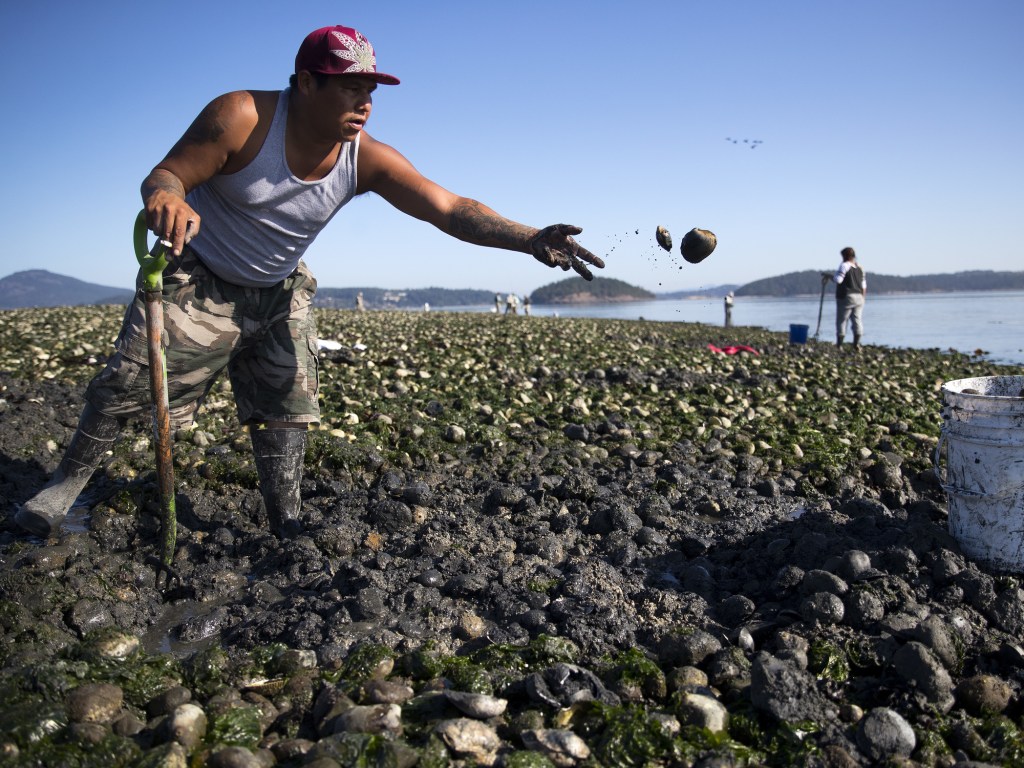
The Swinomish are only one of the many tribes battling against climate change in their respective areas. The Tulalip tribes of Washington are redirecting agricultural runoff for electricity generation, while also solving disputes in the area with eco friendly solutions. The Kootenai Tribes of Montana are invested in planting more resistant plants to warming-related diseases including whitebark pine.

Native tribes are at the frontline of the climate change fight. Sometimes, I think we have to step back and ask ourselves, are we there with them?

 Coleman's blog
It is really interesting that you explored how Indigenous populations are fighting climate change. Often, I think that as the more privileged population with more resources we feel an obligation to do more. Initiatives like the ones you listed above prove that it doesn’t take multi-million dollar projects or partisan policies to do something about a crisis that will affect future generations.
LikeLike
I liked this post a lot. I often feel like, though I’m aware of climate change, I haven’t done much to change it. But, I’m happy to see that there are people taking the initiative. Seeing native tribes taking action is not surprising, yet it’s not talked about. Natives really understand the beauty of the Earth and its riches. So, them trying their hardest to protect what belongs to the Earth fits with their stereotype. But I wish they received more media attention. I appreciate all the work done by Greta, the young activist, and people like her. In the end it takes small actions like the ones done by the natives to make real change.
LikeLike